
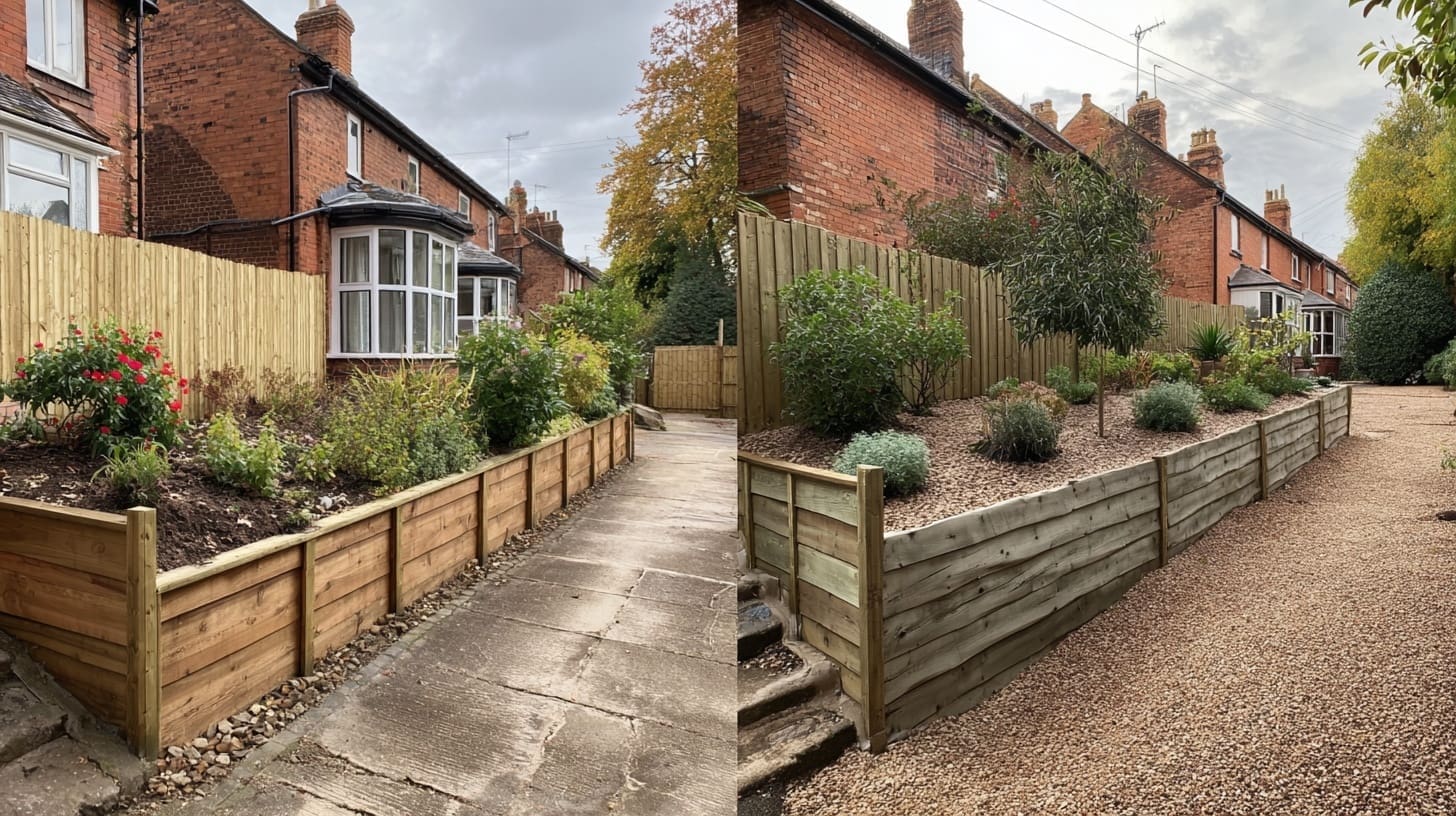
Sloped gardens in Wakefield look lovely until you try to put a fence on them. Choose the wrong method and you get gaps under panels, wobbly posts, and a top line that nags you every time you look out of the window. The fix is simple – match your design to the land. If you are planning fence installation on a slope, this guide explains when to step, when to rake, and how to keep posts solid in Wakefield clay.
Why sloped fences fail so often
Most failures come from shallow posts, rushed concrete, and panels forced to follow the ground with no plan. Clay shrinks in dry spells and swells in wet ones. A light post will shift. A panel that is forced to twist will split rails. A long run on a breeze path becomes a sail if it is too solid. Good fencing on a slope is not guesswork. It is a method.
Step or rake – the choice that sets the look
Stepped fencing keeps each panel level. The top line forms neat terraces. Raked fencing tilts each panel so the top follows the ground. Both work. The right choice depends on the gradient, how you use the space, and what you want to see from the house. Stepping suits medium to steep slopes where a flat top line looks crisp and you want level points for planting or seating. Raking suits gentle gradients and long views where a smooth top line feels natural. Many gardens use both – stepped near patios and gates for tidy junctions, raked on long rear runs for flow.
Reading your slope before you buy anything
Measure the fall over 6 to 8 metres with a string line and level. If the drop is small – say 100 to 150 mm over a panel length – raking will look clean and keep gaps tight. If the drop is larger – 250 mm or more per panel – stepping avoids odd angles and keeps rails square. Plot ground highs and lows. Mark trees, drains, and changes in level. Fifteen quiet minutes with a line and a notebook will save you hours later.
Post depth and concrete that cope with clay
Posts fail first. That is where you win or lose. For a standard 1.8 m closeboard run, post holes around 600 mm deep are common in the UK. On exposed corners or long straight runs, go deeper and consider a heavier section. Use quality concrete, set posts plumb, and allow proper curing time. In soft or made-up ground, widen the footing and bell the base. Keep a tidy collar above ground so water sheds away from the post. These simple steps add years to the life of the fence in Wakefield conditions.
Gravel boards – your best friend on slopes
Gravel boards keep timber out of soil and let you manage small level changes. On stepped runs, boards make each riser neat. On raked runs, they close those awkward wedges at the base. Concrete gravel boards last and give a hard edge that dogs cannot dig through. Fit them first, get them true, then hang panels or board out rails. You will thank yourself when winter arrives.
Closeboard, composite, or mesh on a slope
Closeboard is the workhorse for privacy. It steps beautifully and can be raked with care by fixing boards to raked rails. Composite boards give a modern look and low upkeep. They are best set level in steps with posts and rails square to the world. V-mesh suits side paths where you want visibility and easy maintenance. The composite fencing cost is higher on day one but often pays off over ten years with no painting and fast cleaning. Match the material to how you live, not a photo.
The tidy way to step a fence
Set your corner posts first. Pull a tight string for the first tier. Fit gravel boards level between the first pair of posts. Hang or board the first panel to that board. For the next bay, raise the gravel board by the amount of the step you measured earlier, keeping it level end to end. Repeat down the line. Keep each post plumb. Keep fixings consistent. Finish with neat returns into walls, sheds, or gates so you do not leave odd triangles where pets escape.
The correct way to rake a fence
Raking demands straight rails and consistent angles. Set posts plumb at normal centres. Fix the bottom rail to follow your ground line, then set the top rail parallel to it using packers and a level. Fit boards vertically for closeboard so the eye reads a clean top line. Cap the top. On gentle slopes this looks calm and avoids a staircase effect. Keep base gaps small. Where the ground falls away more sharply, switch to stepped rather than forcing a steep rake that looks wrong and weakens fixings.
Gates on a slope – avoid daily annoyance
Nothing ruins a good fence like a gate that drags. On steps, set the gate on a level landing and build short infill panels to meet the fall. On rakes, use a raked bottom rail or set the leaf to swing over a small ramp. Use strap hinges, a braced leaf, and a drop bolt into hard ground – not soft soil. Keep latch height adult friendly. Make the latch action simple so the gate shuts every time without a shove.
Wind, exposure, and semi solid designs
Exposed Wakefield plots catch gusts. Solid panels act like sails. Semi solid styles – such as double slatted or hit-and-miss – let air pass while keeping privacy. They reduce pressure on posts and make long runs feel calmer in bad weather. If you love the look of closeboard, consider using semi solid for the most exposed bays only. It is a small change with a big effect on how the fence rides out a storm.
Avoiding gaps under panels and strange triangles
Gaps appear when panels meet steps or when raked rails are set at odd angles. Keep risers consistent on steps. Use cut-to-fit infill boards near walls so you do not leave wedges. On raked lines, use gravel boards that track the fall and keep the base tight. Where paths meet fences at angles, form a small plinth in concrete so the fence lands on something solid rather than on a crumble of compacted soil.
Working around stone walls and mature trees
Bradford gets the fame for stone, but Wakefield has plenty of boundary walls and old trees too. Fix to mortar joints rather than into stone when you need wall plates. Use resin anchors for a strong, clean hold. Leave space around trunks. Build short returns that keep the line tidy and let the tree breathe. Never fix through live bark. Plan for growth and wind sway so the fence does not take the strain of a moving trunk.
Drainage details that protect posts
Water wants to sit where the ground steps. Cut small channels to lead it away from post bases. Keep beds and mulch back from posts and boards. If a path meets a riser, drill discreet weep holes or leave a slim gap to let water pass. On heavy clay, a little drainage gravel at the base of each hole helps water move away from the post. Small choices here prevent frost lift and rot.
Simple numbers that help you plan
Most UK rear fences sit at 1.8 m for privacy without planning headaches. Typical post spacing is one panel width, often 1.8 m centre to centre for closeboard panels. Typical post depth for that height is around 600 mm, with more for corners and exposed stretches. These are practical norms, not rigid rules. Your ground, exposure, and design will nudge them up or down. A good installer explains those nudges in plain English.
A single checklist to get slopes right first time
Use this one list to keep the job on track.
-
Measure the fall with a string line, decide step or rake by panel.
-
Set deeper, heavier posts at corners and exposed runs.
-
Fit concrete gravel boards to manage height changes and stop dig outs.
-
Keep rails level on steps and parallel on rakes for tidy lines.
-
Land gates on level points, brace leaves, and bolt to hard ground.
This keeps the design honest and the result neat.
Costs and value without fog
Cost comes from length, height, material, and access. Stepping adds time because each bay is its own level. Raking needs careful rail work and more checking. Concrete posts and gravel boards cost more on day one and reduce callouts for years. Composite sits above timber upfront and below it on maintenance. We price line by line so you can see where each pound goes. You choose where spend makes a difference you can feel every day.
How Care Fencing handles sloped installs
We survey the whole boundary, measure falls, and agree step heights before we lift a spade. We mark services, protect paving, and work in sections so your garden is never wide open. We set posts deep and plumb, cure concrete properly, and keep fixings consistent. We show you the line from the house as we go so the finished top looks right where you see it most. We hand over with a straight, calm fence that fits the land.
Maintenance that keeps slopes looking sharp
Wash panels and posts a couple of times a year. Keep plants off the line so moisture does not sit on timber. Check after storms for movement at corners and end posts. Oil hinges. Touch in small scuffs on coated steel. If you spot early movement, call for a quick check. Small adjustments stop small problems becoming big jobs.
When to repair and when to start again
If posts are moving but panels are sound, a targeted post replacement can save most of the run. If panels have twisted because they were forced to rake too steeply, a stepped rebuild may be the better fix. If rot is widespread at the base, start fresh with concrete posts and gravel boards. We will spell out the options so you can decide with a cool head.
Ready to make your slope look easy
A sloped garden is not a problem. It is a design choice. Step where it helps, rake where it flows, and set posts that do not give up when the clay shifts. If you are comparing fencing companies near me or fencing contractors near me, choose a team that explains the why and not just the what. For a clear plan and tidy result from local fencing contractors, start with Care Fencing and we will help you get a fence that fits your Wakefield slope for years.

