
If you run a site in Wakefield, your fence has a simple job – keep the right people in and the wrong people out while the site stays easy to use. The best results come from plain planning, strong materials, and tidy access control. If you are comparing options and scrolling fencing near me you will see a lot of choice. The key is choosing a system that matches how your yard or car park actually works, not a generic brochure picture. Care Fencing installs, repairs, and upgrades commercial boundaries across West Yorkshire. We build for daily use, not just day one photos.
What commercial sites in Wakefield really need
Shops, schools, trade units, and retail parks all share the same core needs. You need a secure perimeter that resists casual entry. You need gates that open safely and predictably in all weather. You need clean sight lines for CCTV and lighting. You also need an install that can be phased around trading or term times so the site stays open. Security is the aim, but it should not look hostile. Neighbours, pupils, and customers live with the result, so style matters as much as strength on public faces.
A simple way to design the line
Start with three questions. What are you protecting – stock, vehicles, pupils, plant? How do people and goods move – on foot, in cars, in artics? Where does the day pinch – shift change, school drop off, weekend peaks? Answer those and the rest falls into place. You can then set the boundary, choose the fence type by zone, and decide the gate positions and widths. This approach removes guesswork, avoids dead corners and blind spots, and keeps costs tied to real risks.
Heights that work without fuss
Most commercial rear and side boundaries work at 2.0 m to 2.4 m. Schools often choose mesh at 2.4 m around play areas for visibility and control. Retail frontages tend to sit lower with railings to look tidy and keep sight lines. If you need privacy for bins or stock, we can add solid screening to short sections. Keep solid runs limited on public faces or you create wind load and dark corners.
Picking the right system by zone
Different edges, different jobs. Mesh panel systems give strength and high visibility. Vertical bar railings look smart, resist knocks, and deter climbing. Palisade still has a role on back-of-house lines with higher risk. Closeboard or composite screens are useful for tidy bin stores or to hide plant in customer areas. The system should match the risk and the look of the zone, not a one-size-fits-all idea. Care Fencing often blends two or three systems on one site so every edge pulls its weight.
Posts, foundations, and Wakefield ground
Fences fail at the base, not the panel. Clay around Wakefield moves in wet and dry cycles. We counter that with proper post size, depth, and quality concrete. For typical 2.0 m to 2.4 m lines we dig deep, keep posts plumb, and allow full cure before loading. Corner and gate posts take higher loads, so we upsize and reinforce those. In paved yards we core drill and reinstate cleanly. Where forklift or vehicle strikes are possible, bollards and wheel stops protect the line and pay for themselves the first time they take a hit.
Gates decide daily safety
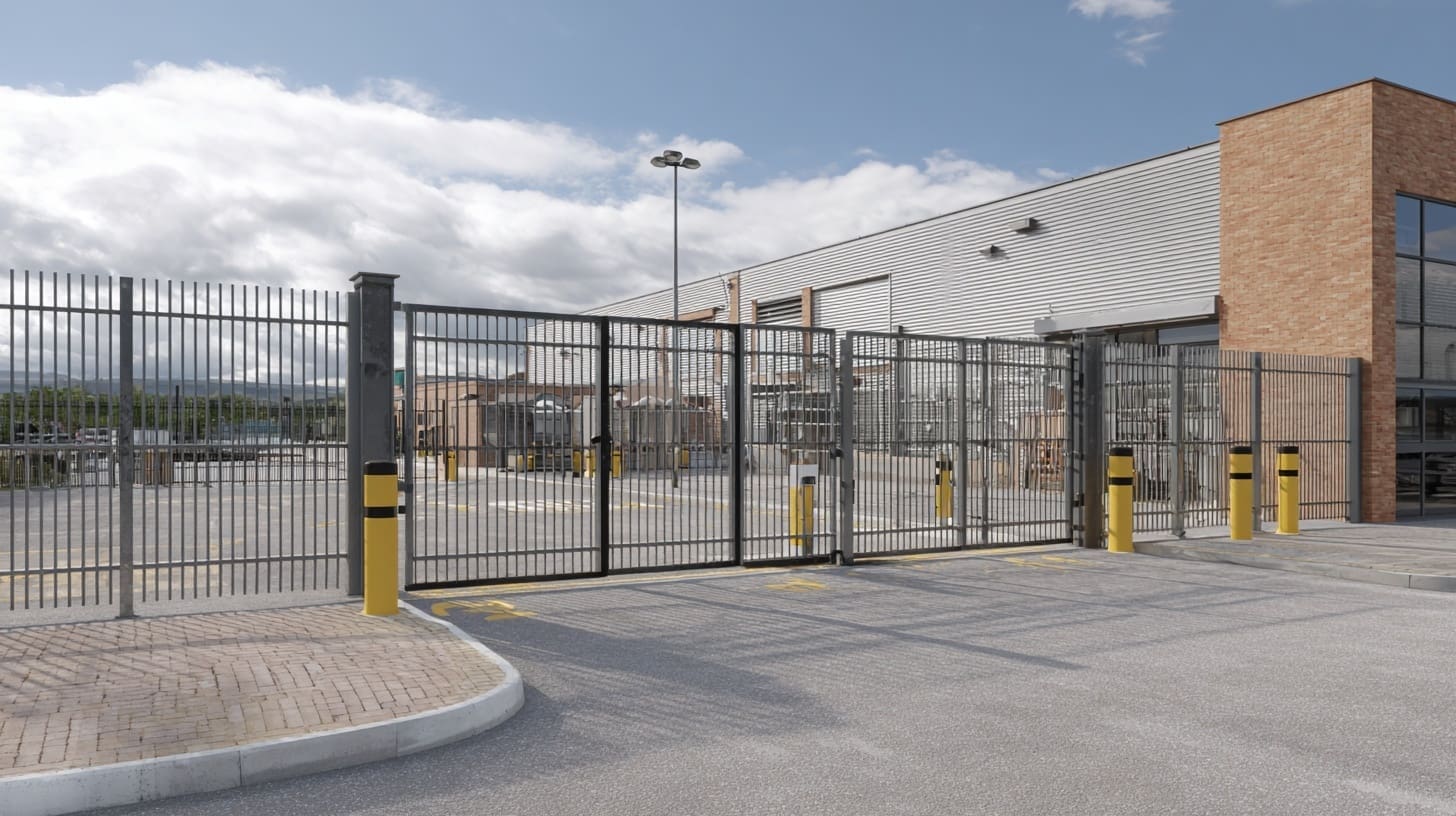
A fence is only as good as its gates. For pedestrian gates, self-closing hardware and safe latches reduce tailgating and propping. For vehicle gates, clear widths and safe swing paths matter more than fancy motors. Double-leaf swing gates work for many yards if traffic is light and turning circles allow it. On tight plots or where vehicles queue, a tracked or cantilever sliding gate keeps openings clear and avoids swing conflicts. Whatever you choose, manual release must be simple so staff can open the gate in a power cut. We commission gates with real-world tests, not just a button press.
Access control that people use
Access systems fail when they are too clever. Keypads, fobs, or simple readers mounted at the right height, with robust steel housings, beat complex, fragile setups. Pair access control with good signage and clear ground markings so visitors know where to wait and where not to stand. Keep CCTV and lighting aligned with the gate so footage is useful at dusk and in rain. The best security makes the right behaviour the easiest behaviour.
Visibility and the CCTV triangle
Security cameras, lighting, and fences must work together. Mesh near cameras keeps views clear. Railings at frontages let public areas feel open and watchable. Solid panels in the wrong place create blind spots that hide risk. When we plan a boundary, we mark camera cones and lighting footprints so the new line does not block the view you paid for. It sounds basic because it is. That is why it works.
Where railings beat mesh, and where they don’t
Railings shine on public faces – schools, showrooms, office entrances. They look smart, are hard to dent, and signal quality. Mesh wins near cameras and sports areas because you keep visibility and reduce snag risks. On back-of-house lines with higher threat, heavier mesh or palisade deters cutting and climbing. Style is not an afterthought. It helps you match the fence to its context and to the people who use the site every day.
Screening plant without creating problems
You can screen bins, compressors, or external plant with closeboard or composite sections. Keep those screens modest in length and height where they face public areas. Add gaps or louvres where airflow matters. Leave space to maintain equipment. If the screen sits near cameras, keep top lines below the camera or step the panel to avoid blockages. The aim is discretion, not a wall that hides risk.
Vehicle movements and safe swing
Delivery vans and refuse trucks define your gate. Plan turning circles and approach angles. Keep columns and posts out of pinch points. Mark stop lines so drivers do not nudge the gate on opening. Protect outer posts with bollards set at the correct standoff. If vehicles reverse onto public roads, consider sliding gates that open parallel to the fence and remove swing arcs. A few painted lines and two bollards can save a gate from a year’s worth of knocks.
Small car parks with big problems
Many Wakefield sites squeeze customer parking against boundaries. That creates repeat scrapes, tight turns, and blocked exits. Low railings or mesh with a top rail protect landscaping without feeling heavy. Where bays face a boundary, wheel stops keep bumpers off panels. Pedestrian gates need a safe waiting pocket so people do not step into vehicle paths. Your car park can feel tidy and safe with a few small design choices.
Safe pedestrian routes at schools and clinics
Safeguarding means clear routes and controlled crossings. Use mesh lines to separate play areas and service yards. Set pedestrian gates away from vehicle gates so users do not mix. Fit child-safe latches and finger guards at school gates. Keep visibility for staff with mesh and avoid solid runs near play. These practical choices make supervision easier and reduce incidents. They also help fire drill flows because everyone knows the intended paths.
Repair or replace – spend where it counts
Not every tired fence needs a complete rebuild. If panels are sound but posts have failed at ground level, we can swap posts, add concrete gravel boards, and bring the line back. If a gate drags, new hinges and a closer may fix it. Whole-run replacements make sense when you need a new security level, when the style no longer suits the site, or when repeated spot repairs are costing more than a planned upgrade. We will tell you straight which route gives better value.
A one-page spec that just works
Here is a simple spec outline we often use for tidy, durable results.
-
Public frontage: Powder-coated vertical bar railings at pedestrian height, matching pedestrian gate, tidy signage.
-
Side and rear: 2.0 m to 2.4 m welded mesh panels on galvanised and coated posts, tamper-resistant fixings.
-
Vehicle access: Sliding or double-leaf steel gate, manual release, safety edges or photo beams, bollards to protect posts.
-
Screens: Short runs of closeboard or composite around bins or plant, with airflow gaps if needed.
This blend keeps the front smart, the sides secure, the cameras clear, and maintenance low.
The numbers that guide everyday choices
Most UK rear commercial lines sit between 2.0 m and 2.4 m because that height deters casual entry without creating overbearing walls. Typical post holes for those heights start around 600 mm deep, going deeper on corners and long straight runs to handle wind load. Powder-coated steel with a galvanised base layer resists corrosion for many years with basic washing. Concrete posts and gravel boards on screening sections keep timber off wet ground and reduce callouts. These are steady, field-tested facts that shape builds which last.
Costs without fog or jargon
Cost tracks four things – length, height, system, and access. Mesh and railings price differently but both deliver value when matched to the right zone. Gates and automation add the biggest single items, which is why sizing them correctly pays off. We price line by line so you see posts, panels, gates, access control, and protection items like bollards. No fog. No bundles you cannot compare. You should know where every pound goes.
How Care Fencing phases work to keep you trading
We can work out of hours, in short windows, or in school holidays. We fence in sections so your perimeter is never left open. We keep routes safe with barriers and clear signs. We coordinate with deliveries so trucks are not idling at a closed gate. We leave the site clean each day. When we hand over, gates shut with a solid click, and your staff know how to operate them. That calm, predictable process is why many local managers come back to us.
Planning, neighbours, and keeping the peace
Rear and side heights rarely cause planning issues, but public faces and conservation areas need thought. Railings blend better on streets with period buildings. Mesh works in modern estates. Where a boundary edges homes, consider acoustic panels on short, targeted runs rather than a heavy wall. We talk to neighbours where needed and keep works civil. A good fencing contractor manages people as well as posts and panels.
Maintenance that protects uptime
Wash coated steel a couple of times a year. Keep soil and planting off bases. Test gate safety devices and closers. Oil hinges. After storms, walk the line and push on corner posts – if anything moves, book an inspection. Small planned checks beat big unplanned outages. If you want a set-and-forget approach, Care Fencing can schedule a light maintenance visit that keeps costs predictable.
Why Care Fencing for Wakefield commercial sites
We are a local team with long experience on shops, schools, clinics, and yards. We specify what the site needs and nothing it does not. We build neatly, protect paving, and phase work so you can keep trading. Many managers find us by searching for fencing contractors and stay because the work stands up and the handover is clean. If you want to see how we approach domestic as well as commercial jobs, our service hub for fence installation near me sets out the basics in plain English and is a useful starting point when scoping a project – visit fence installation near me for a simple overview.
Ready to close the gaps for good
Commercial fencing is not complicated when you match systems to zones, protect the base, and choose gates that suit traffic. Keep cameras and lights clear. Blend strength and style on public faces. Build once and build well. If you are weighing options after searching for fencing near me, ask Care Fencing for a straight plan and a fair price. We will help you secure the site without turning it into a fortress, so your team can get on with the work that matters.

